Table of Contents
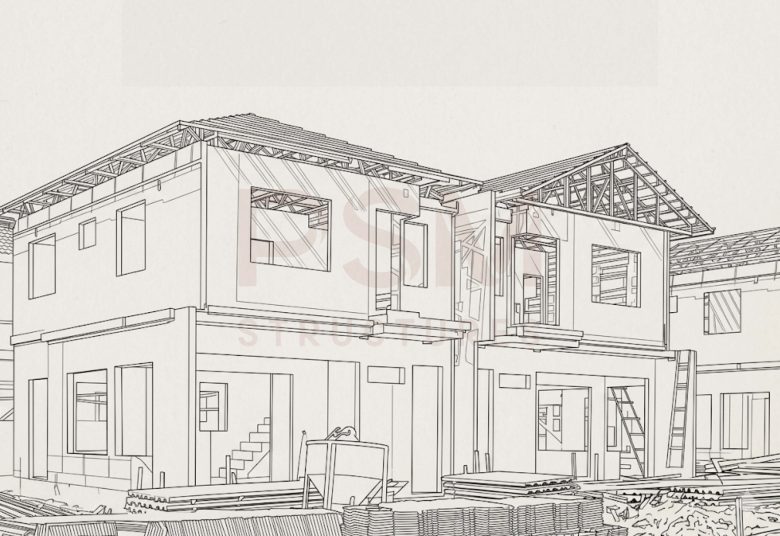
Precast concrete homes are moving from a niche method into a mainstream housing option across India. Faster build times, factory-controlled quality, and predictable costs are pushing plot owners, villa developers, and township builders to look seriously at precast houses instead of conventional brick-and-RCC construction. The questions that follow are always the same. What does precast house construction actually involve? What is the real precast concrete house cost in India? And how do you tell a capable builder from one that simply outsources panels?
This guide answers those questions for anyone weighing precast concrete homes for a residential project, from a single house on an individual plot to a phased township of repeating units.
What Are Precast Concrete Homes?
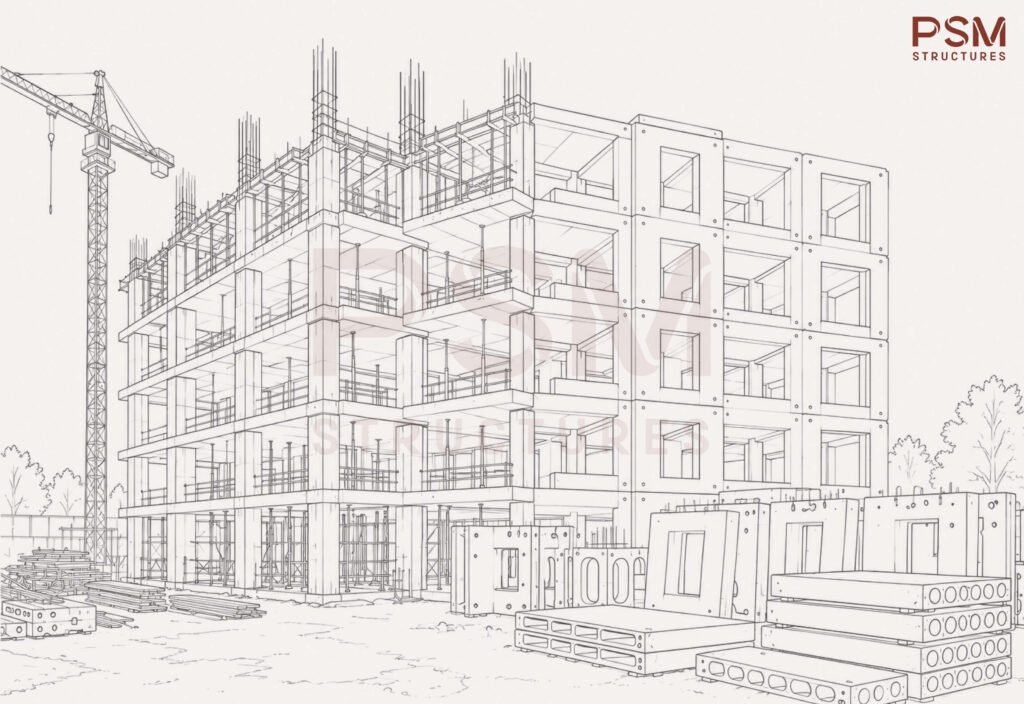
Precast concrete homes are houses built from structural components cast in a factory and assembled on site. Instead of mixing and pouring concrete into formwork at the building location, the walls, floor slabs, staircases, and sometimes the roof are cast as finished panels in a controlled plant, cured to strength, then transported to the plot and lifted into place with a crane.
The result is a house that uses the same concrete most Indian buyers already trust, produced under factory conditions that a wet site cannot match. Precast homes are not a lightweight or temporary alternative to conventional construction. A properly engineered precast house carries the same loads, meets the same IS codes, and lasts as long as a cast-in-situ RCC building, often longer, because the concrete is batched, vibrated, and cured to a consistent standard every time.
Two terms come up interchangeably in the market. Precast houses usually refers to the building method. Precast concrete homes signals the material and the structural system together. Both describe the same approach: factory-cast concrete elements assembled into a finished home.
Precast House Construction: How a Precast House Goes Up
Precast house construction follows a sequence that looks very different from a conventional site, where most work happens in place over many months. With precast houses, the heavy work moves to the factory, and the site work becomes a controlled assembly operation.
Design and Detailing
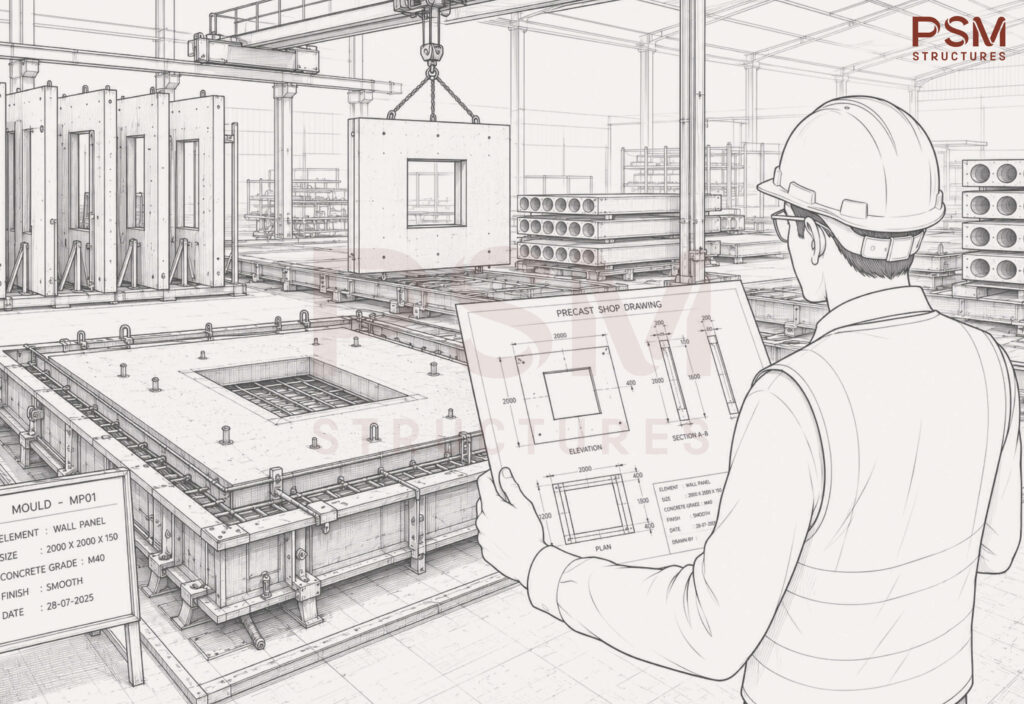
Every precast house construction project starts with a complete structural and architectural design. Because the panels are cast to final dimensions before anything reaches the site, the design has to be locked early. Openings for doors and windows, plumbing chases, and electrical conduits are all detailed into the panels at this stage. That front-loaded design discipline is one reason precast concrete homes carry fewer surprises during the build; the decisions that cause site rework in conventional construction are resolved on the drawing board.
Factory Casting
Walls, floor slabs, staircases, and beams are cast in steel moulds at the plant. Mix design, reinforcement placement, and curing conditions are controlled to a standard a site cannot replicate. While the factory produces the elements, foundation and groundwork run in parallel on the plot, which is where precast house construction recovers most of its schedule advantage over a conventional programme.
Transport and Assembly
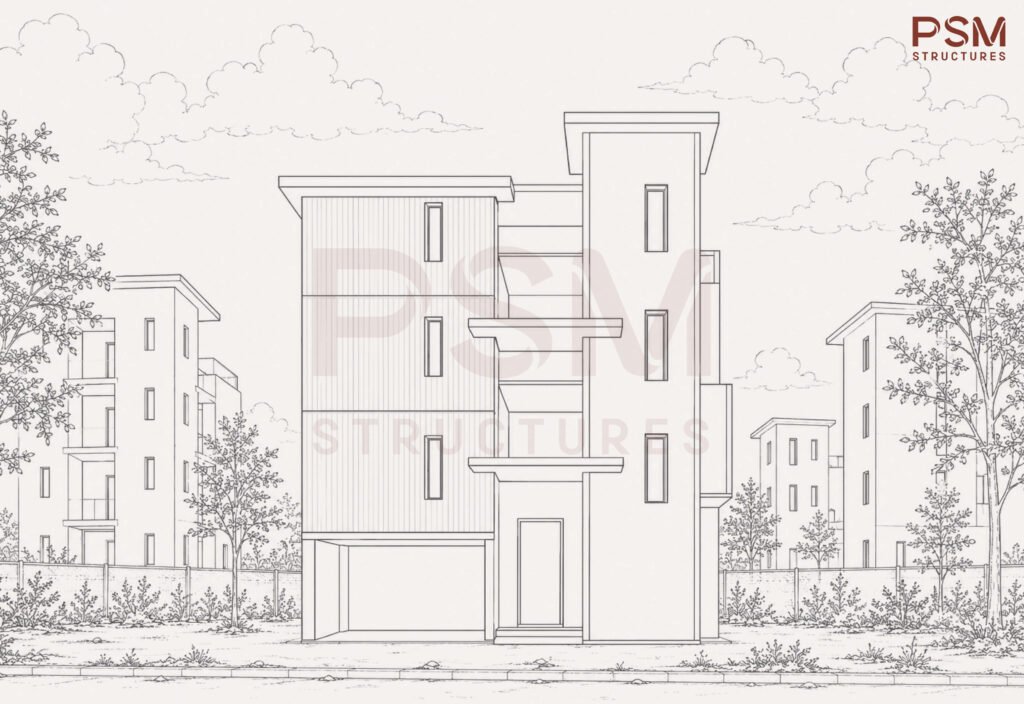
Finished elements are transported to the plot and lifted into position with a crane, then connected using cast-in steel inserts, grouted joints, and in-situ concrete at key junctions. A single-storey precast house shell can be assembled in days rather than the weeks a conventional structure needs. Once the shell is up, the finishing trades, plumbing, wiring, flooring, and painting, proceed much as they would in any home. The visible result is a house indistinguishable from a conventionally built one; the difference is in how it got there.
Planning a residential project with precast?
PSM Structures works with plot owners, villa developers, and township builders on structural design, precast element scope, and the civil package from the earliest stage of the brief.
Discuss Your Project →Precast Concrete House Cost in India
The precast concrete house cost in India is the question that decides most projects, and the honest answer is that it depends on scale, finish, and repetition.
For a one-off house on a single plot, precast concrete homes often cost roughly the same as good-quality conventional RCC construction, somewhere in the range of Rs 1,600 to Rs 2,500 per square foot for the structure and a basic finish, depending on the city, the design, and the specification. The mould and transport costs do not spread across a single unit, so the per-square-foot figure sits close to conventional construction on a standalone home.
Where precast pulls ahead is repetition. On a township, villa, or group-housing project with many similar units, the same moulds cast unit after unit, the casting yard runs at efficiency, and the precast concrete house cost in India can drop meaningfully below conventional construction per unit, while delivering faster and with tighter quality control.
| Factor | Precast Concrete Home | Conventional RCC Home |
|---|---|---|
| Shell build speed | Days to a few weeks | Several months |
| Quality control | Factory-controlled | Site-dependent |
| Cost on a single unit | Comparable | Comparable |
| Cost at scale (repeating units) | Lower per unit | Higher per unit |
| Design changes after start | Limited (locked early) | Moderate |
| Weather impact on schedule | Minimal (cast indoors) | Significant |
| Finish consistency | High and repeatable | Variable |
What Drives the Precast Concrete House Cost in India
Several variables move the precast concrete house cost in India up or down:
- Number of repeating units, the single biggest cost lever; more identical units means lower cost per unit
- Transport distance, since a casting plant far from the site adds logistics cost to every element
- Design complexity, because irregular shapes and many unique panels raise mould cost
- Finish specification, as the structural shell is only part of the figure; flooring, joinery, and fittings sit on top
- Site and crane access, where a constrained plot that limits crane movement adds time and cost
- Soil and foundation conditions, since precast is heavier and the foundation design responds to the ground
Building a Low Cost Precast Concrete House
A low cost precast concrete house is achievable, but it comes from the right decisions, not from cutting structural corners. The levers that produce a genuinely low cost precast concrete house are standardised layouts, repeating unit types, a plant within a sensible transport radius, and a simple rectilinear form that uses fewer unique moulds.
Affordable and government housing programmes across India have used precast in exactly this way: a low cost precast concrete house delivered at scale, built fast, with predictable quality across thousands of units. For an individual plot owner chasing the single lowest possible number on a one-off home, conventional construction can still compete. Precast economics reward volume and repetition, so the low cost case is strongest when the same house is built many times.
Decision factor: Precast cost falls with repetition. For one bespoke house the figure sits near conventional; for many identical units it drops below. For the structural sequencing principle that protects that schedule advantage, see the precast civil package guide.
Precast Homes vs Conventional Construction
The choice between precast homes and conventional construction rarely comes down to one number. Conventional construction offers flexibility, a design can change mid-build, and a single highly custom home can be cheaper to build in place. Precast homes offer speed, factory quality, and cost certainty that strengthen as the project scales.
Precast homes also remove much of the dependence on skilled site labour, which is increasingly scarce and expensive. The skill concentrates in the factory and the erection crew, not in dozens of trades working in sequence on the plot. For developers managing programme risk and quality across multiple units, that shift is often the deciding factor, ahead of the headline per-square-foot cost. The same logic plays out in industrial work, covered in the PEB vs precast concrete comparison.
How to Choose Precast Concrete Home Builders
Not every firm that advertises precast is set up to deliver a complete home. Choosing among precast concrete home builders means looking past the panels to the engineering, the plant, and the site capability behind them.
Strong precast concrete home builders control, or have reliable access to, the three things that make precast work: in-house structural design and connection detailing, a casting plant with proper quality control, and an experienced erection team with the right cranes and connection know-how. A builder that simply buys panels from a third party and bolts them together on site carries the risk at the weakest point, the connections, without the engineering depth to manage it.
When evaluating precast concrete home builders, ask:
- Who does the structural design and connection detailing, and to which IS codes?
- Is the casting plant their own or outsourced, and what is the quality control regime?
- Can they show completed precast homes of similar type and scale?
- How do they handle the joints and waterproofing at panel connections?
- What is the realistic site programme from foundation to handover?
Decision factor: The connection detailing and the joint waterproofing are where precast houses succeed or fail over a 30-year life. Those answers separate capable precast concrete home builders from panel resellers.
Are Precast Concrete Homes Right for Your Project?
Precast concrete homes suit some residential projects far better than others.
Precast is the stronger choice when:
- The project has multiple repeating units, such as townships, villa clusters, or group housing
- The schedule is tight and a fast, weather-independent build matters
- Consistent, factory-grade quality across every unit is a priority
- Skilled site labour is scarce or the site is remote
Conventional construction can still be the simpler choice when:
- It is a single, highly custom one-off home with a unique design
- The plot has no crane access or is too constrained for element delivery
- The design is likely to change during the build
If the project points toward repetition, schedule certainty, and quality consistency, precast concrete homes make a strong case on both cost and programme. If it is a single bespoke house on a tight urban plot, conventional construction may remain the easier path. The decision is worth making early, at the design stage, because precast rewards planning and penalises late changes.
Buyers judge precast on the cost of a single house, where it barely beats conventional construction, then walk away. The economics live in repetition. Lock the design early, standardise the units, and keep the casting plant close to site. That is where precast concrete homes deliver cost, speed, and quality together.
Parv Modh
Getting the precast decision right from the start
PSM Structures advises plot owners and residential developers on structural system selection, precast element scope, and design sequencing, at the stage where the choice actually saves time and cost.
Talk to the Team →Precast Concrete Homes: Frequently Asked Questions
The precast concrete house cost in India typically runs from about Rs 1,600 to Rs 2,500 per square foot for the structure and a basic finish, depending on city, design, and specification. On a single one-off home the figure sits close to conventional RCC construction. On projects with many repeating units, the per-unit cost falls below conventional construction as mould and setup costs spread across the units.
On a single house, precast homes cost roughly the same as good conventional construction. The cost advantage appears with repetition. When the same unit is cast many times across a township or villa project, precast becomes cheaper per unit while building faster, so the more units a project has, the stronger the precast cost case.
The shell of a precast house can be assembled on site in days to a few weeks once the foundation is ready, because the elements are cast in the factory in parallel with the groundwork. Total time to handover then depends on the finishing trades. Precast house construction usually delivers a finished home faster than an equivalent conventional build, and it is far less exposed to weather delays.
Yes. Precast concrete homes are engineered to the same IS codes as conventional RCC buildings, including seismic provisions. The structural performance depends on the connection detailing between elements, which is why the engineering behind the panels matters more than the panels themselves. A properly designed precast house matches or exceeds the durability of a cast-in-situ home.
Yes. A low cost precast concrete house comes from standardised layouts, repeating unit types, a simple form with fewer unique moulds, and a casting plant near the site. India's affordable housing programmes use precast this way at large scale. The savings come from repetition and planning, not from reducing structural quality.
Look for precast concrete home builders with in-house structural design and connection detailing, their own or a quality-controlled casting plant, and a proven erection team. Ask to see completed precast homes of similar scale, and ask specifically how they handle joint waterproofing and panel connections. A firm that only resells panels without the engineering behind them carries the risk at the weakest point.
No. A finished precast house is visually indistinguishable from a conventionally built home. The same flooring, plaster, paint, joinery, and fittings are applied. The difference is in how the structure is produced and assembled, not in how the finished precast houses look or live.