Table of Contents
India needs new cold storage and logistics space, and the civil method you pick decides whether you hit your handover date. Government data from the National Centre for Cold-chain Development records 8,815 cold storages with a combined capacity of 402.18 lakh metric tonnes as of June 2025, yet that capacity is growing at only about 2.2 percent a year. The gap is not bulk storage alone: the NCCD assessment identifies a shortage of roughly 3.2 million metric tonnes of cold storage along with 70,000 packhouses and 52,000 reefer vans, which points to a real need for modern, integrated facilities. Developers and EPC contractors who can deliver usable space quickly are the ones winning these projects. That is the backdrop for why so many cold storage and logistics park teams now look hard at precast civil scope.
Why cold storage suits precast in the first place
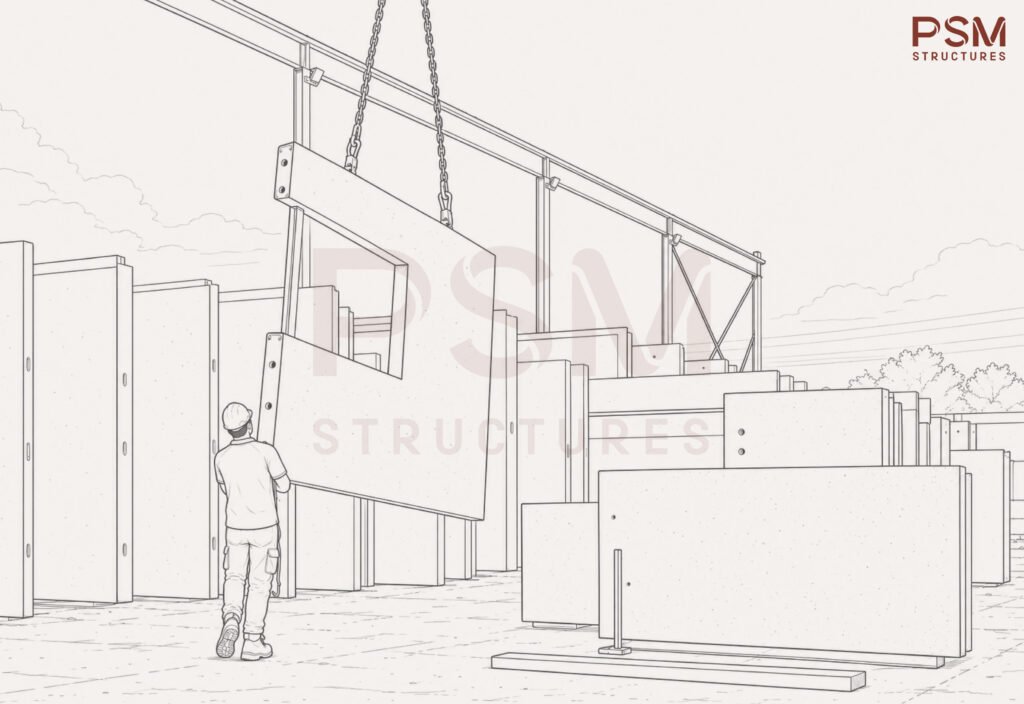
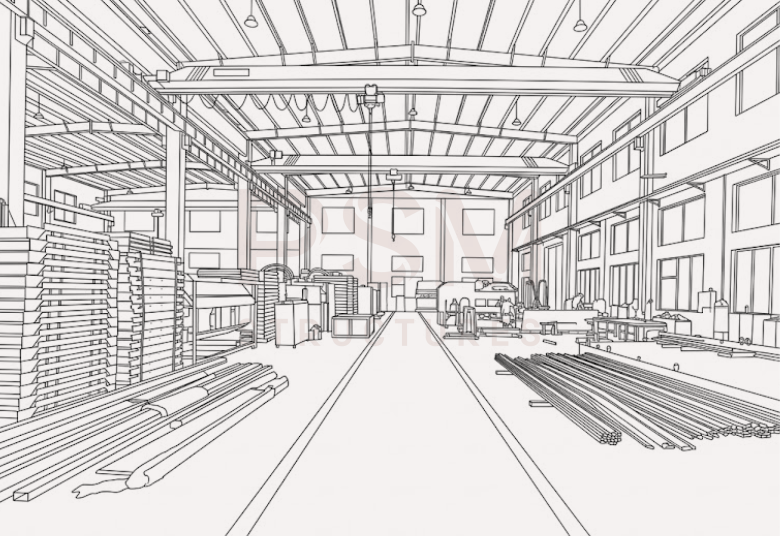
Cold storage buildings and logistics parks share three traits that make precast a strong fit: long clear spans, repeating structural grids, and tight dimensional tolerances. A typical facility is a series of identical bays repeated across a large footprint, which is the ideal condition for factory casting. You design the unit once, cast it many times, and erect it in sequence while other trades work in parallel. That repetition is why precast methods can cut construction schedules by up to 40 percent compared with cast-in-situ on suitable projects.
Tolerance matters more here than in a normal warehouse. Cold rooms depend on insulated panel lines and vapour barriers that need a true, flat, predictable structure to seal against. Factory-cast elements hold dimensions far more reliably than site-poured concrete exposed to weather, which protects the thermal envelope you are paying so much to maintain.
Talk to PSM Early
If you are scoping a cold storage or logistics park civil package, our team can review your grid and structure choice before tender.
See Our ServicesWhat the precast civil package actually includes
When people say "precast civil package," they often picture only the superstructure. The real scope is wider, and pricing it correctly means knowing every part:
- Foundations and plinths: designed for heavy reefer traffic, rack loads, and point loads from refrigeration plant.
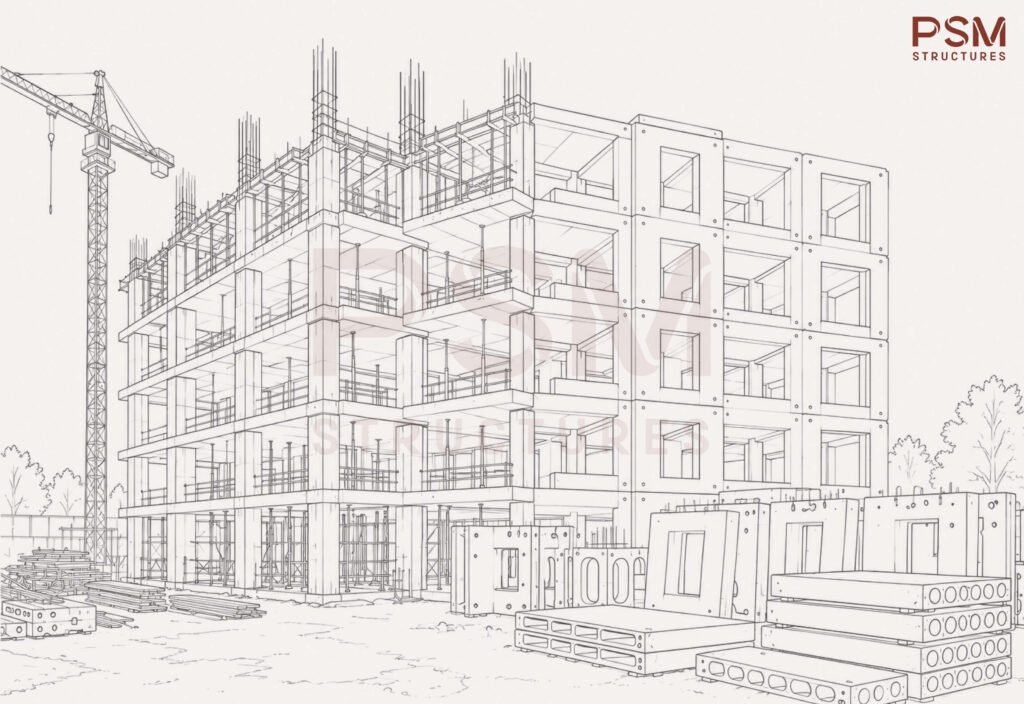
- Precast columns and long-span beams: the repetitive-bay frame that carries the roof and any mezzanine.
- Precast or composite floor systems: flat, level slabs that suit racking and material handling equipment.
- Insulated precast wall panels or a precast frame clad with insulated panels: the line where structure meets the thermal envelope.
- Loading dock structures, ramps, and dock levellers: the busiest and most damage-prone civil zone in any logistics park.
- Service trenches, drainage, and equipment foundations: for chillers, condensers, and standby power.
Each of these elements needs detailing that anticipates how it connects to the next. The interface between a precast frame and the insulated panel system is where most cold storage problems start, so connection design and embed placement deserve attention long before anything reaches site.
Planning the scope early is the real win
The benefit of precast is only available to teams that plan for it early. Element design, mould preparation, and factory casting run on lead times, so a late decision to switch to precast usually loses the schedule advantage that justified it. The smart sequence is to confirm the structural method during design, lock the grid, and start detailing while site enabling works proceed. Done that way, the factory is casting your columns and panels while your civil team prepares the ground, and the two streams meet at erection.
Planning a Facility Now?
PSM produces execution-ready precast detailing and shop drawings so your factory and site stay in step.
Contact Our TeamWhere projects still go wrong
Even on a good precast job, two issues recur. First, embeds and connection details get finalised too late, which forces site rework on the dock and panel interfaces. Second, the civil package and the refrigeration package are tendered in isolation, so equipment foundations and the structural grid do not line up. Both are detailing and coordination problems, not material problems, and both are avoidable with early, accurate shop drawings that treat the building and its cold-room fit-out as one system.
For developers chasing the cold chain opportunity, the lesson is simple. Precast is well matched to cold storage and logistics parks, but the value lives in the civil package detailing, not just the decision to go precast. Get the scope, the interfaces, and the lead times right early, and you turn a real capacity gap into delivered, rentable space on time.
Ready to Build?
PSM supports precast and RCC projects end to end, from the first structural drawing to the day you walk into a completed building. Bring us in before your civil tender closes.
Talk to Our ExpertsFAQs About Precast Cold Storage Construction
Per-element costs can run higher because of factory, transport, and crane overheads, but total project cost is often neutral to lower on repetitive buildings once you count the time, labour, and rework savings. On cold storage, the faster handover usually drives the financial case more than the unit rate.
Cold storage buildings have long spans, repeating bays, and tight tolerance needs for insulated panels. Factory casting suits all three, and the controlled dimensions protect the thermal envelope.
Foundations, columns, long-span beams, floor systems, insulated wall panels or panel-ready frames, loading dock structures, and the trenches and equipment foundations for refrigeration plant.
On suitable repetitive buildings, precast methods can reduce schedules by up to 40 percent versus cast-in-situ, mainly because casting runs in parallel with site works.
Late finalisation of embeds and connection details, especially at the frame-to-panel and loading dock interfaces, which forces avoidable site rework.
During design, before the grid is locked. Precast lead times mean a late switch usually loses the schedule advantage that justified it.
Yes. Logistics parks share the same long-span, repetitive-bay pattern, so the same precast civil logic applies, with or without the cold-room thermal envelope.